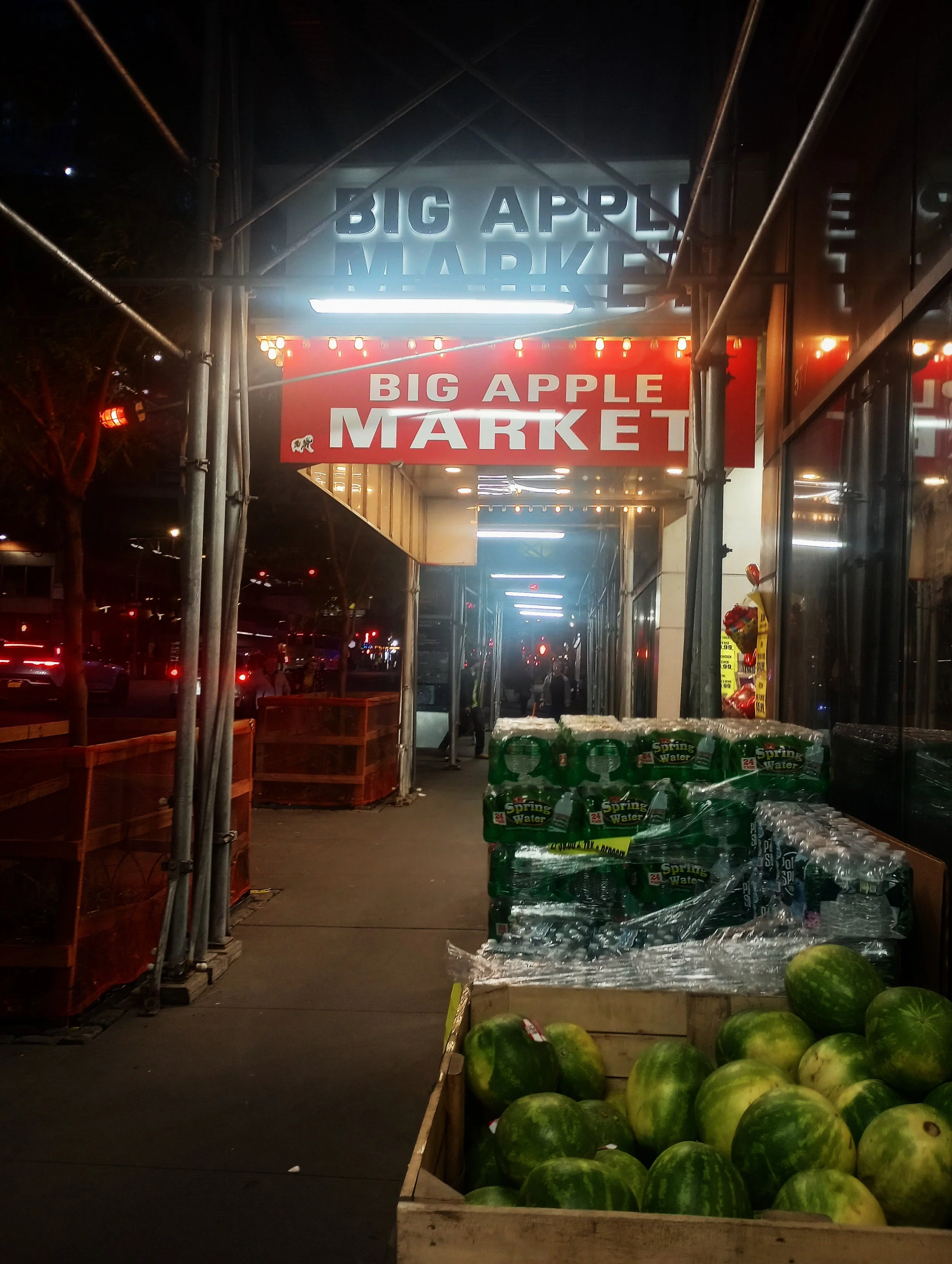
THE FICTIONAL HISTORY OF THE BIG APPLE MEAT MARKET
By Monica Moran
5/15/2026
Poor data quality is a subject of significant importance with regard to information as well as AI. The scope of online inaccuracy is much larger than users realize and can lead to a series of issues that are unforeseen.
One verifiable case study might be of some interest to New Yorkers; the fictional history of the original location of The Big Apple Meat Market now located on Ninth Avenue at 577 in “a larger more modernized space as of October 2020”.
The history of this seemingly insignificant grocery store is, for some, a major threshold. For data scientists and fact checkers it can serve as a landmark sample. With a robust media ecosystem, the need for researched verification is paramount when one factors in the use of online content that is available to all users with any number of social media accounts.
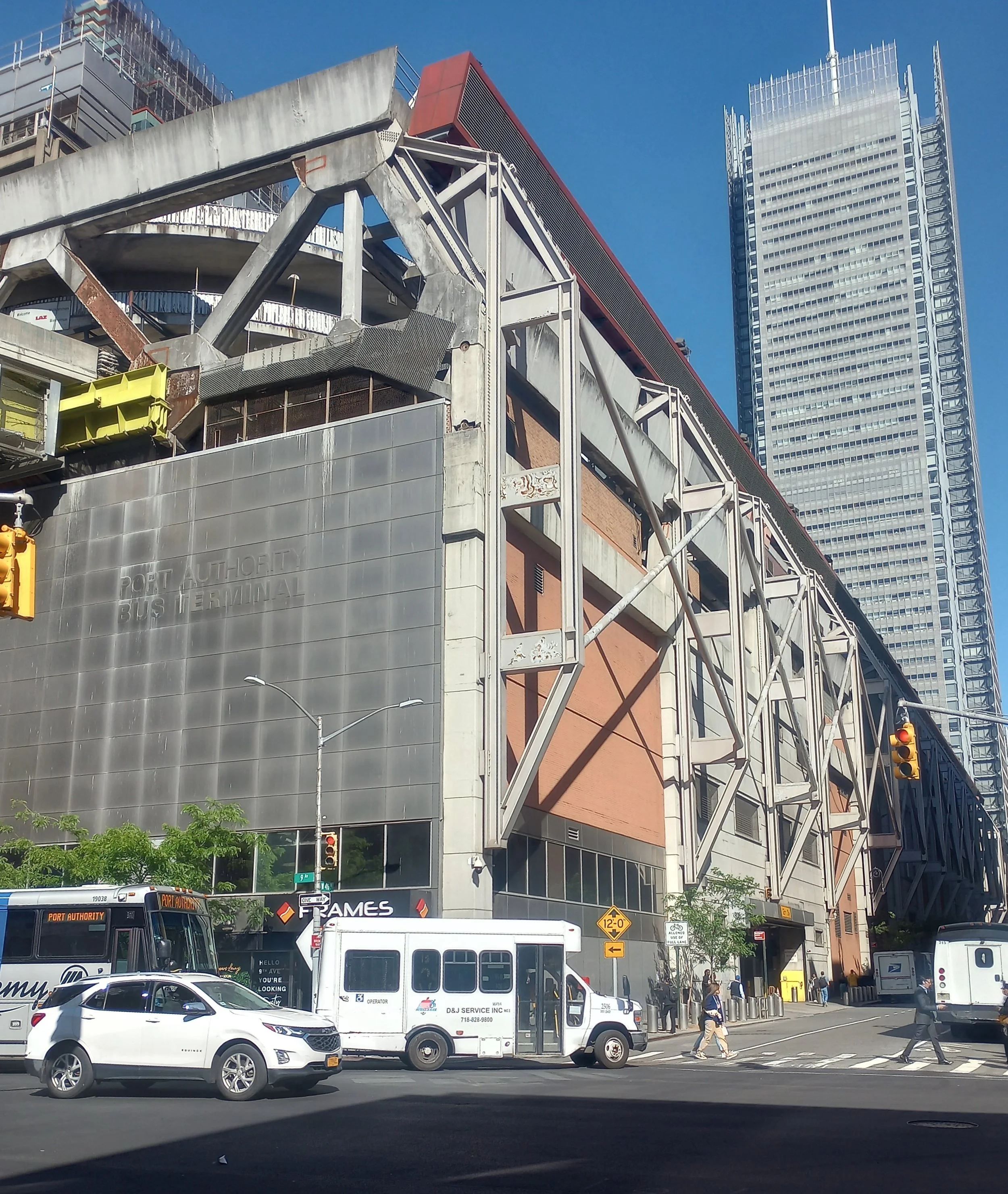
View of Port Authority Bus Terminal from 529 Ninth Avenue.
Photo by Monica Moran 5/12/2026
Subject of Dispute
The store has had a presence in Hell’s Kitchen since 1992 according to most sources and an undeniable location of origin at 529 Ninth Avenue, which is the subject of dispute. The original owner of Western Beef, which opened in 1976, Pete Castellana Jr. of Howard Beach, Queens also owns The Big Apple Meat Market in Hell’s Kitchen.
According to Google Maps as well as AI Overview the original location of The Big Apple Meat Market is 575 Ninth Avenue. This has been described as “AI hallucinations by some,” reportedly by The New York Times featuring an AI model stating that “the best carbohydrates are meat, dairy and eggs.” With regard to the location of the Meat Market, in an article published in 2010, The Times would only commit to “a storefront on Ninth Avenue between 41st and 42nd Streets” (the actual location is between 39th and 40th). However, according to data obtained by the U.S. Department of Defense, it’s a much larger phenomenon which is cited in the September 11 attack on the Pentagon. This data suggests that The Big Apple Meat Market was an example incorporated into data on the attack.
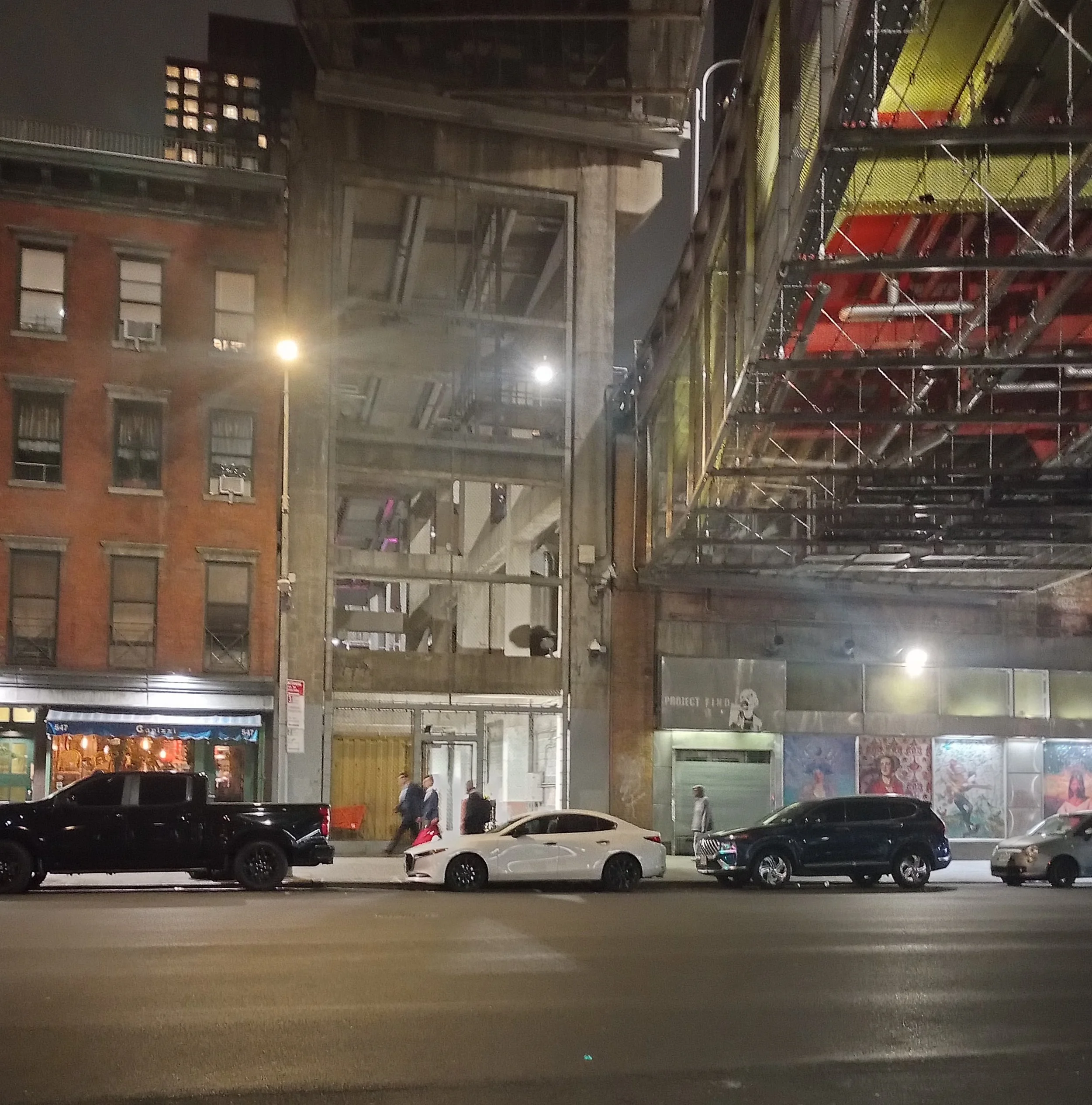
The old location reported by The New York Times between 41st and 42nd.
Photo by Monica Moran 5/12/2026
A Statement
Upon entering the new location this week, I was able to obtain a statement from a grocery clerk who was stocking shelves. “Is this the original location?” I asked. “Yes, this is it,” he replied, happy to stop for a moment and speak with me. “They rebuilt it,” he added as he pointed up, “to this.” Meaning that the new location was housed within a very large and renovated residential facility at the corner of 42nd Street and Ninth Avenue. I didn’t continue questioning him although I knew the original location. He had more than concluded our discussion as he happily carried on, actually whistling as he pushed a cart to a storage room.
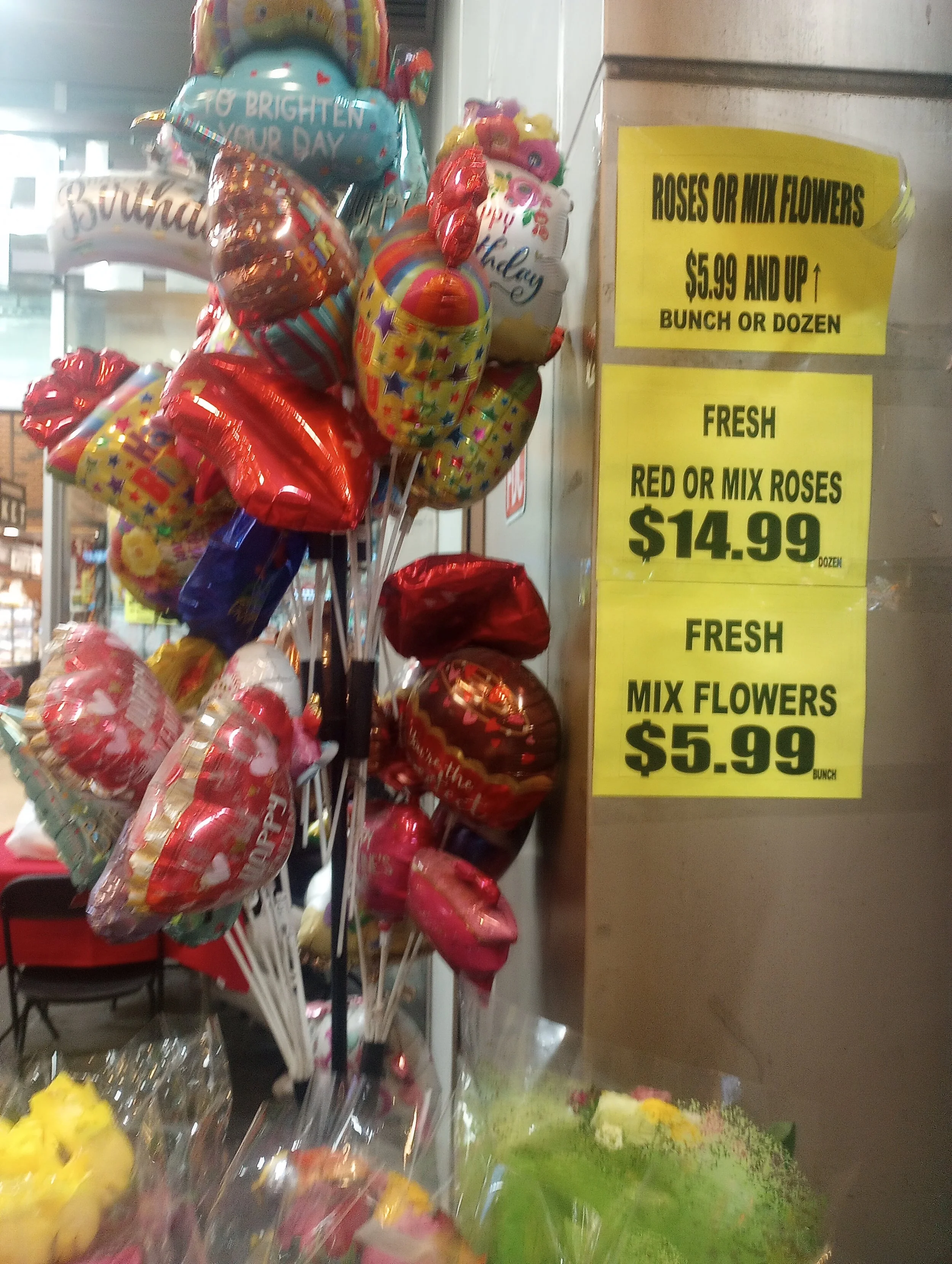
Merchandise on display at the new location.
Photo by Monica Moran 5/12/2026
Port Authority
This type of debate may seem trite to some readers but for historians and scientists it’s a life-or-death matter, as well as for financial industries. Poor data costs American businesses $3.1 trillion annually. And for those concerned with reputational damage, the tales of irreversible consequences can spiral into longform fiction. Misreporting leads to a cross-platform, re-indexing of data sets and can also lead to the incorporation of unrelated data into Defense archives, (and in this case, AI summaries). One small systemic flaw can create a mass of misinformation. As noted, these errors do not remain isolated and eventually shape institutional memory in a profound way historically.
A Toy Story
The memorial display inside the Port Authority Bus Terminal actually echoes the severity of the matter. An assembly of what looks like three artist’s mannikins dressed as officers in a childlike mannerism, juxtaposed to the horrifying images sequenced on a monitor, creates at first glance, a confusing array of symbolic identity. A full spectrum of innocence and destruction as handcuffs and a baton are carefully placed next to the trio, mounted remnants of marble and cement, as if to commemorate the disaster, is propped up at the foot of the small podium. The display's construction seemed like-minded to the anthropomorphic faces on motor vehicles. And the displaced location of the market on Google maps.
The display existed as if to brief the viewer on the slapstick comedy of street vendors. Those belonging to Theater Row, who might be waiting for you--just outside the terminal with a similar method of persuasion as The Three Stooges, loud laughter or public humiliation. One man's humor is another man's terror? And the whistle of a store clerk at the expense of your being lost. A request, a confirmation, a missing location on an online map. It can be seen through the lens of the beautiful minds and precious moments of the inquisitor missing and gone astray. Or simply a reminder that this type of comorbidity is a scenario for disaster as is online misinformation.
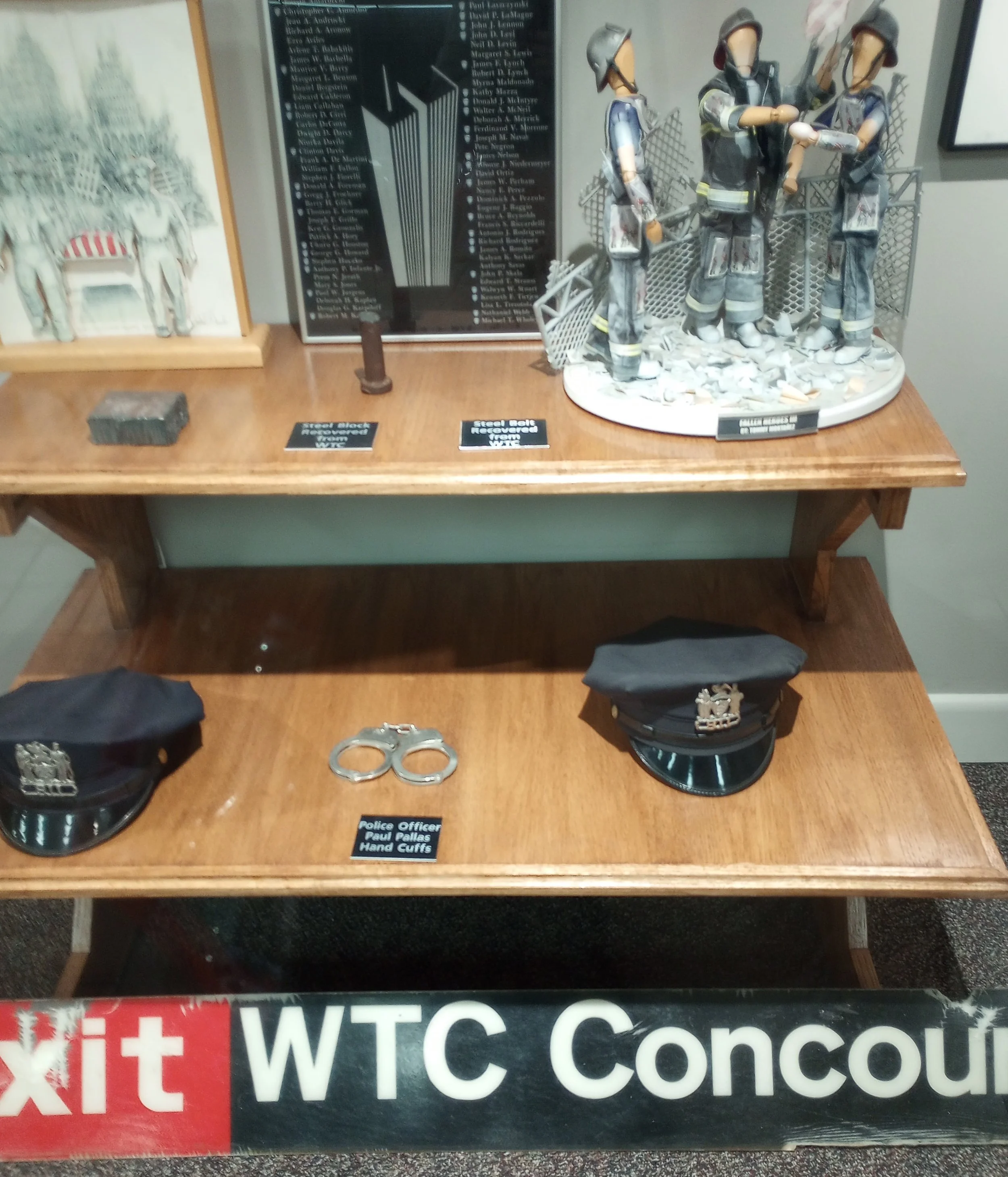
Artifacts from The World Trade Center.
Photo by Monica Moran 5/12/2026
A Famous Case Study
In Eric L. Santer’s book, My Own Private Germany, he methodically interprets Freud’s famous case study of Daniel Paul Schreber’s delusions, like many postmodernists, as a condition of contemporary culture. And the current, popular use of the term “existential risk” expresses the broader concern associated with artificial intelligence, pandemic crisis and a basic loss of assigned meaning. Within this context, The Big Apple Meat Market becomes a case study, not because of its cultural significance, but because it illustrates how systemic flaws displace historical record not just for New Yorkers but as a universal condition.
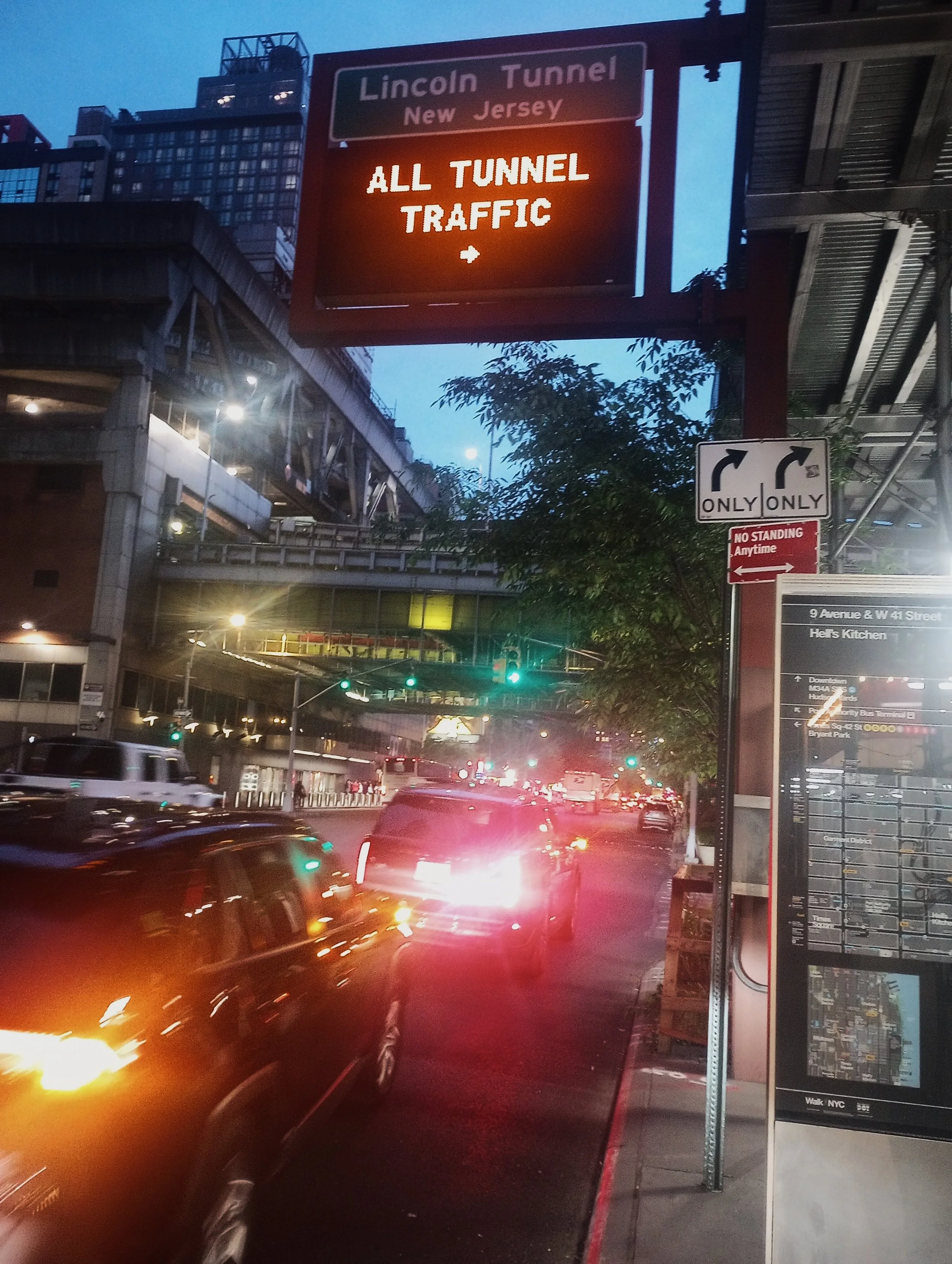
Traffic at Port Authority Bus Terminal directly adjacent to 577 Ninth Avenue.
Photo by Monica Moran 5/14/2026